

Loading Jaywing website
18 February 2026 / Opinion

Beyond the Link: Why 70% of AI Search is the New Retail Battleground

Egle Gudiskyte / Head of SEO

The "blue link" era is ending. For two decades, retail success meant ranking #1 on Google. That's no longer the whole story. Australian shoppers aren't just scanning results anymore; they're asking AI to decide for them.

Our latest research, conducted with the global AI search visibility tracking & optimisation platform, Writesonic, confirms the shift is already underway. Nearly 70% of AI-powered retail searches now carry immediate commercial or transactional intent.

Key Takeaways: AI Retail at a Glance

  • The Buying Mindset: 69% of AI searches come from users who are ready to buy or actively comparing products.
  • The Consideration Engine: 53.83% of all AI retail queries happen in the middle of the funnel. AI is where Australians narrow their shortlists.
  • The Power of Structure: Listicles and category pages account for over half of all AI citations, significantly outperforming traditional blog posts.
  • Shopping Features Dominate: Around 70% of AI responses now include product cards, pricing, or direct purchase links.

Why We Conducted This Research

There's no shortage of AI hype. We built this study to cut through it and give retailers something genuinely useful: a strategic framework for Generative Engine Optimisation (GEO). By analysing seven major Australian retail verticals, we mapped exactly how AI models like ChatGPT and Gemini decide which brands to recommend, and which to pass over entirely.


What AI Actually Cites

Visibility in AI search isn't about brand size. It's about how your content is built. AI consistently rewards content that's easy to scan and structured for comparison.

List and comparison formats are winning

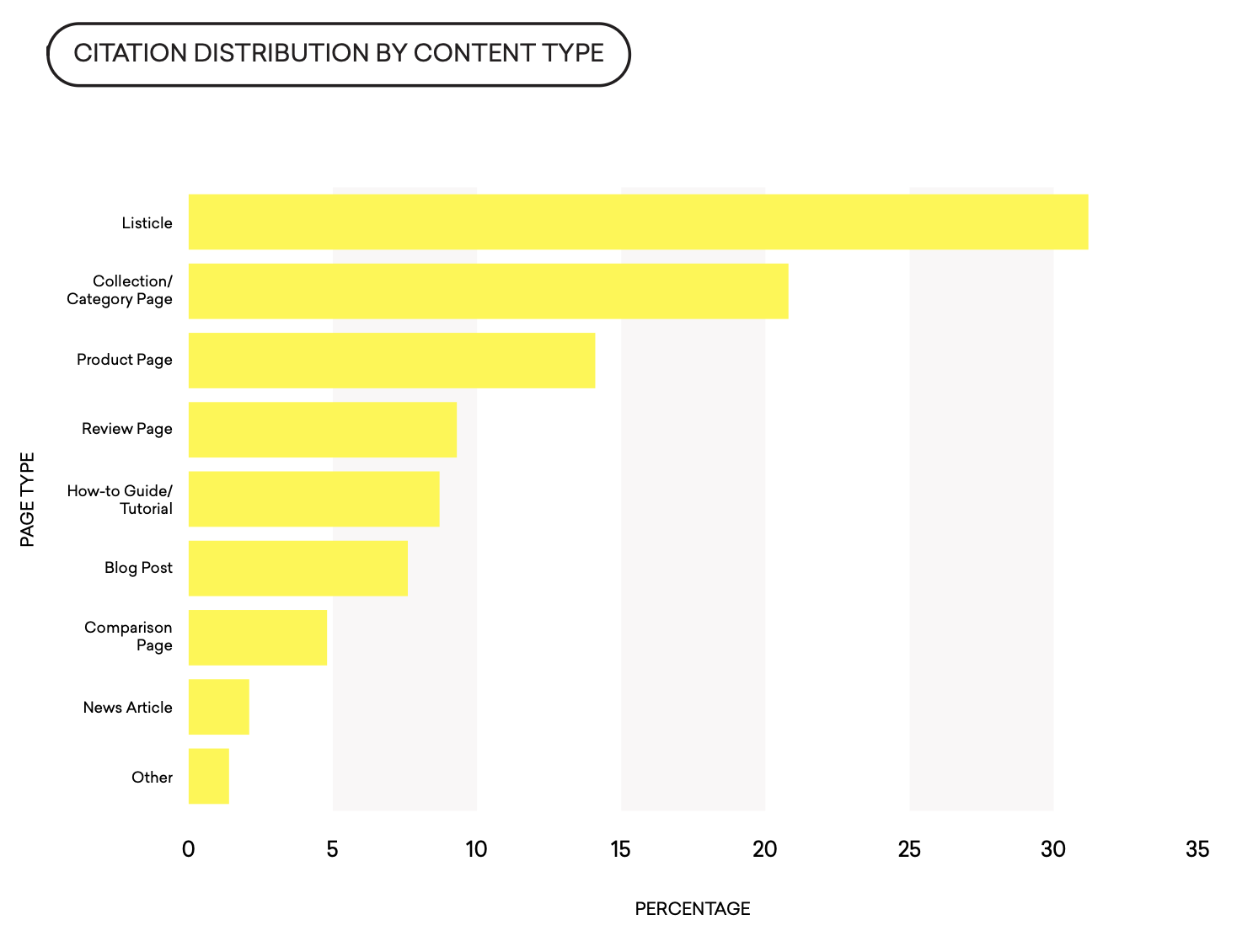
Our data shows AI leans heavily towards structured content. Listicles account for 31.2% of citations, while collection and category pages make up another 20.8%. Together, that's more than half of all content cited in AI-generated answers. The reason is straightforward: AI prioritises content that answers "best for," "top picks," or "worth it" questions, because those formats give the model the explicit judgements it needs to construct a useful response.
The gap between discovery and purchase is closing fast

Around 70% of AI retail results now feature shoppable elements, including product cards, pricing, and direct retailer links. This isn't a future trend. It's already here, and it means accuracy in your product feed now matters just as much as the quality of your copy.

Australian brands are holding their ground

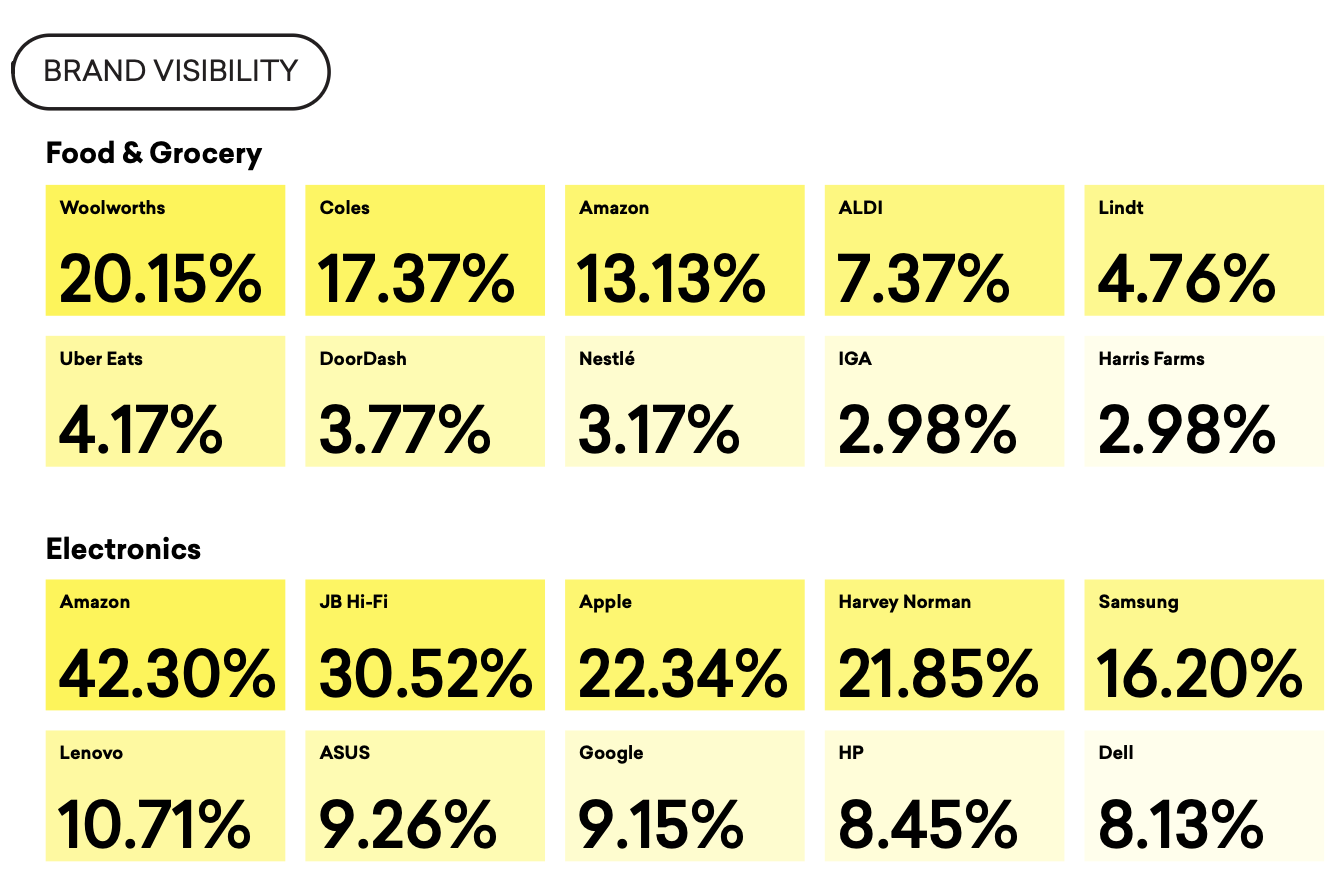
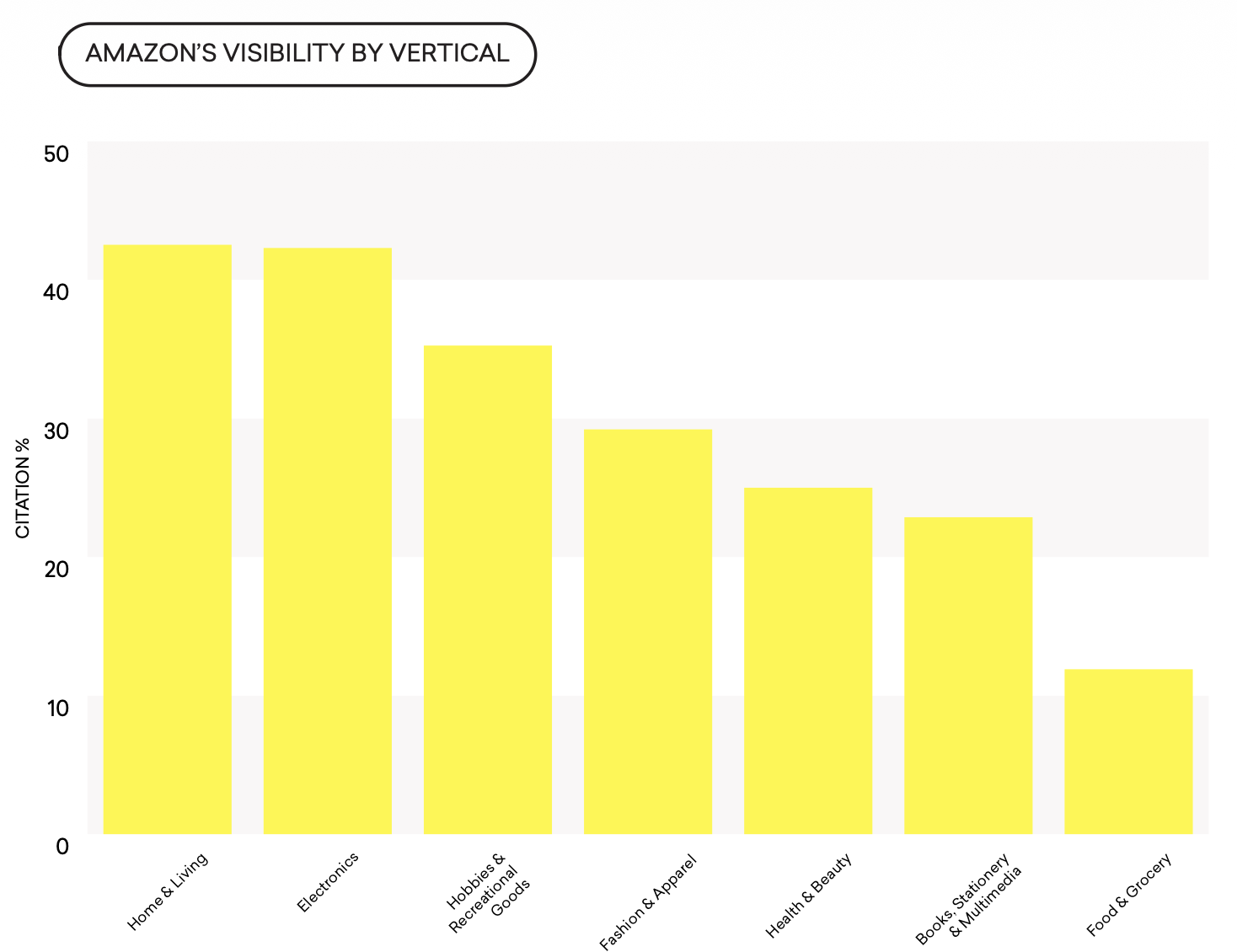
Amazon leads in verticals with broad, standardised products, taking 42.3% visibility in Electronics. But where trust and specialist knowledge matter, Australian brands are more than competitive. Woolworths and Coles together account for 45% of AI brand visibility in Grocery, closely mirroring real-world consumer trust. In categories like books and pharmacy-led retail, local brands maintain meaningful visibility precisely because AI prioritises sources it trusts enough to reuse.


From SEO to GEO: What to Do About It

"The brands that win aren't those with the most content. They're the ones with content AI can confidently reuse. In AI search, authority is increasingly earned through where you're mentioned, not just where you rank." — Jaywing Strategy Team

The GEO Checklist for Retailers:

  1. Build for extractability. Ranked entries, consistent feature fields, and comparison tables are your friends. AI rewards content it can scan and reassemble quickly into a coherent answer.
  2. Prioritise citations. Trusted sources drive visibility. Being mentioned in community forums or cited by vertical specialists like TechRadar or Vogue carries real weight now.
  3. Get agent-ready. As AI platforms continue to shorten the path to purchase, retailers need to host a UCP manifest, a digital handshake that ensures AI agents can facilitate transactions directly on your behalf.